

Field Notes 02: Deconstructing realities
Observations: quantum physics has entered the chat, a desire for sobriety, and anti-God institutions.

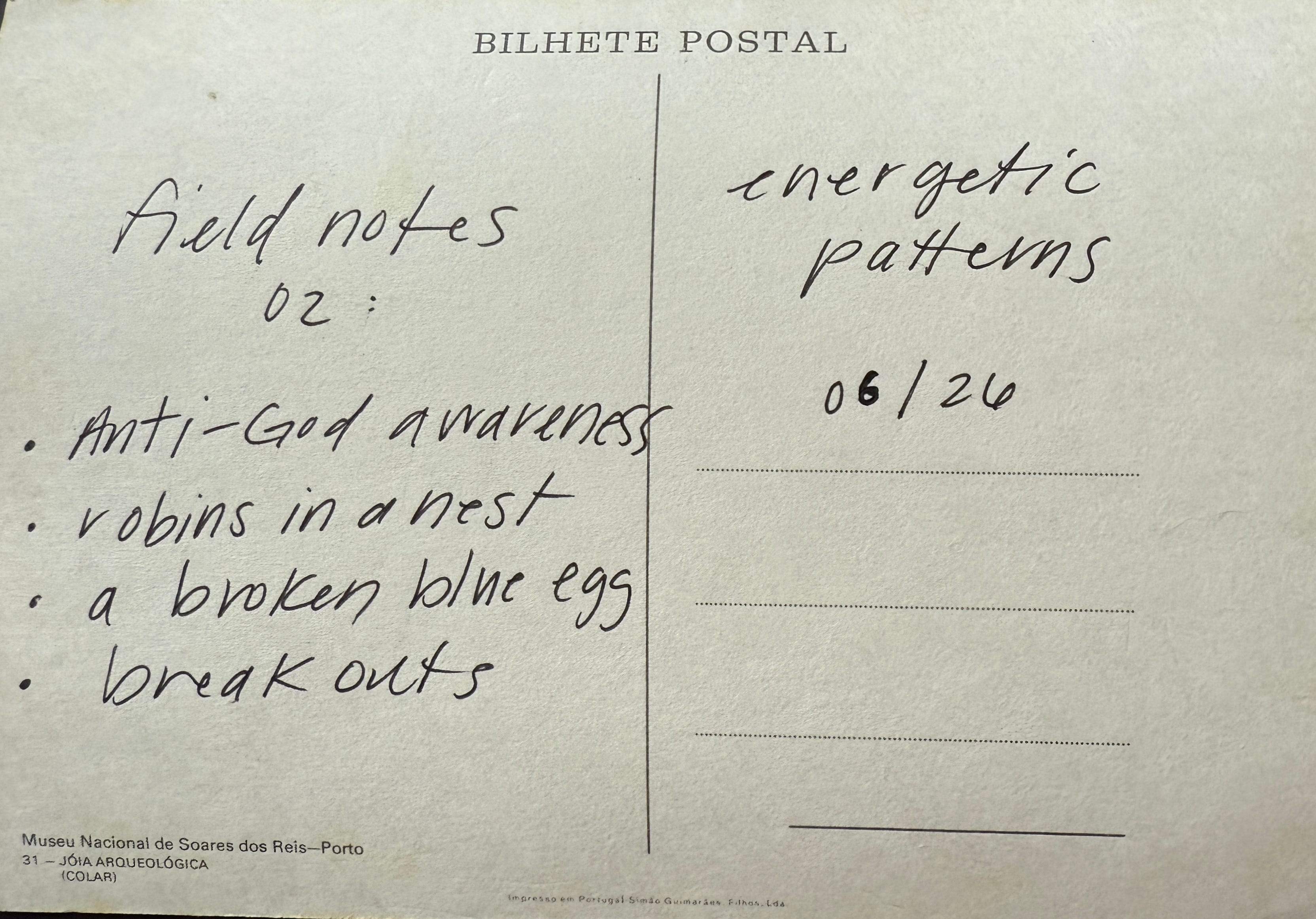
Field notes 02
Sunday, June 14, 2026
15:55 EST
London, Ontario
Damp air, colourless skies. A steady drum of rain. Aching shoulders. Fecund suburban landscape; green, lush, explosive.
Observations:
- Conversations about God and childhood
- Sensitivity to the environment showing on the skin
- American robins eating mulberries in the tree
- A sleeping cat on the foot of the bed
- Downpour: the exact weather as two Sundays ago when the first Field Notes was sent out.
Leah
xo
A great unravelling of reality
Observing two currents: an awakening to love and the idea of oneness.
Quantum physics: Awakening to the field
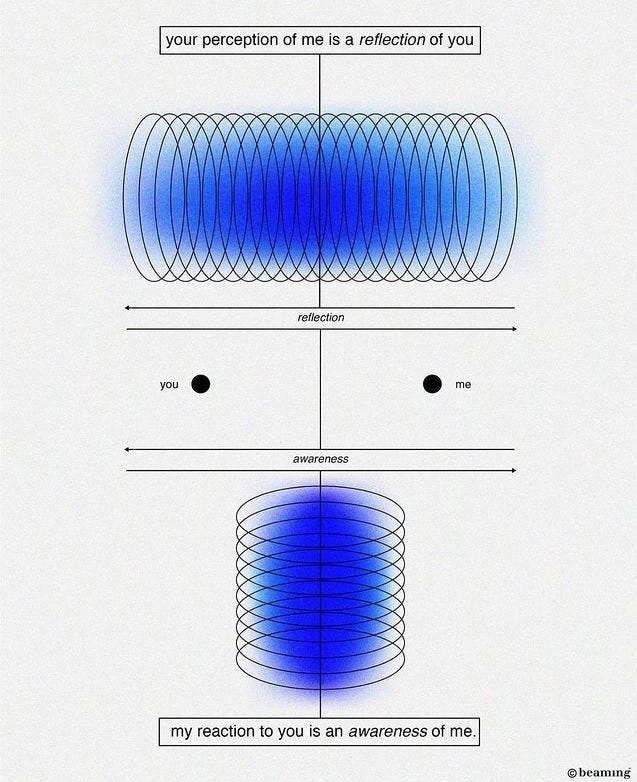
Around midnight, if I am still caught in a browsing loop online, I start seeing videos about timeline jumping, girls doing qi gong, and how to create your desired reality. The larger web they belong to: quantum physics. The science of the field, quantum physics is the idea that beneath the solid world, reality is a field of relationships, where possibility precedes certainty. Such videos (ex. Janelle Monae’s affirmations, or mathematic laws as principles for life) express that we can participate in the creation of new, better, loving realities. How do we do that? Through conscious participation and new patterning.
But’s not just my feed — friends are offering their own unprompted thoughts here and there, often in my DM’s, queuing up conversations around quantum physics what it means to exist within this super-computer called the field.
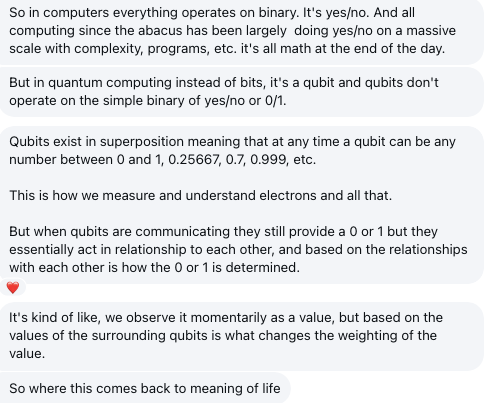
Bigger trend: As we become more aware of the field, the mind becomes drawn to its principles and articulations. Truth is being formed as we connect the dots between scientific theories, philosophies, and spiritual ideas.
Why are we becoming increasingly interested in the field? Besides the fact that the field is always pushing us towards a higher good, many people don’t like the reality we’re living in and desperately want to change it.
A higher, more loving reality will be built with repeated acts of love, and it appears we’re being trained to know how to do that. If that feels abstract, all you need to know is that everything is malleable — your reality, your identity, your consciousness, your world — and there are things we do and do not do that subsequently create reality. Acts of love create a life of devotion which creates heaven on earth (a better reality).
We are one in the spirit: Lessons of Nonduality
In my travels, I seem to be drawn to communities practicing an idea that we are all one in God. At Namaste Village, we meditated, sang of loving awareness, and talked of our sameness. At Taizé, a monastic community in France, humans from the wide reaches of Europe gathered to discuss the world’s issues, using scriptural principles to determine what a life of love and responsibility means. In both places, it wasn’t about believing the same doctrines, it was about working together with one heart and spirit.
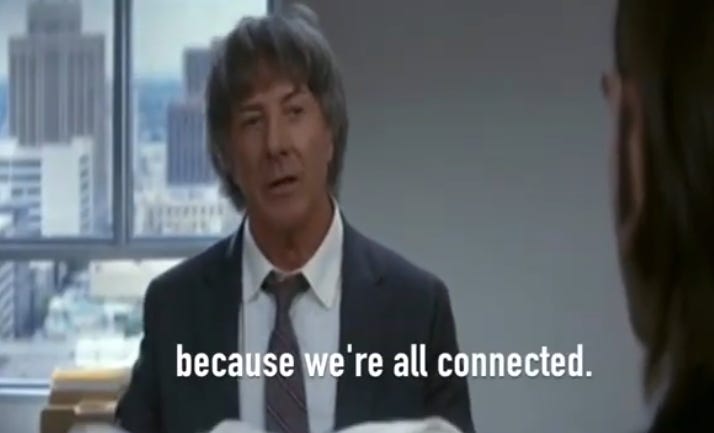
Following the threads, we are led to a spiritual philosophy called Nondualism, which states that separation between self and other, subject and object, human and divine, is ultimately an illusion. You may remember it articulated in the blanket scene from I Heart Huckabees (an iconic, absurdly wonderful film). The idea of oneness is a somewhat radical proposition, especially when institutions profit from the idea that we are fundamentally different from one another. We are a society of categorizations — without them, how do we define our identities?
Bigger trend: The appeal is understandable. Reality is changing; our systems are shifting (re: collapsing) and the divisions we once found useful are causing more harm than helping. We can clearly see where the path of individualism and self-at-the-centre leads, and it’s not great.
People are beginning to suspect that beneath these fictitious identities based on culture and preference, we belong to something far bigger and more continuous than we thought. This idea of oneness helps us to understand that we are in it together, and that everything we do affects those around us.
Nondualism says that when we break down the mind’s walls, we can access a greater sense of being and connection. Taking one look at the world right now, it’s easy to see how we need a little more of that.
The duality: The collapse of illusion is rarely straight-forward, but it is often a prerequisite for truth to emerge. Many communities are talking about how this is a very significant time in history; an age of awakening via exposure and confronting reality. Whatever’s happening in the collective psyche, we seem to be recovering our ability to see what unites us, rather than separates us. Hopefully, this will continue to move towards a sense of unity and togetherness.
Going alcohol and religion-free
Renegotiating the terms of consciousness, desire, and what it means to belong.
Non-alcoholic movement: A thirst for self-awareness
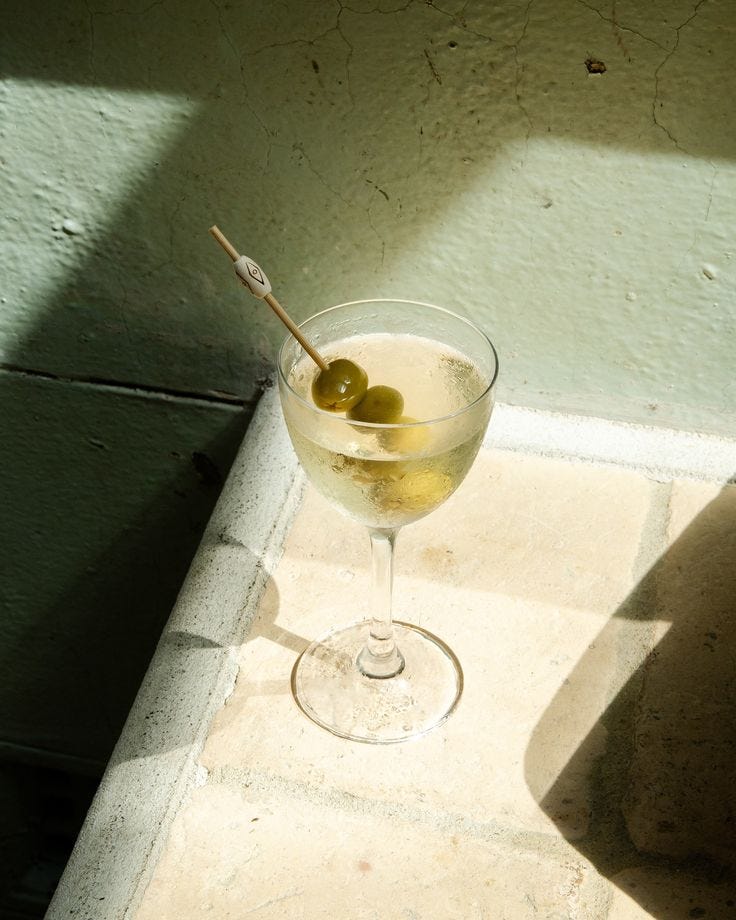
New to me, but already trending: socializing without the support of alcohol. Leading up to my birthday, I told friends I’d pick up a few bottles of Prosecco, Campari and gin to make spritzes and negronis — our usuals. Combined with some briny gildas and small tapas plates, it was rounding out nicely for a buzzy, intimate gathering.
24 hours before, a feeling grew large and loud within me: It didn’t feel right to imbibe. Instead, I made watermelon and hibiscus agua fresca, mixed olive juice with tonic water, and called it a night. Everyone was happy, unsurprisingly, for they all bring enough spirit to a room anyway. I’m not what you’d call a “Big Drinker” but it was my first time hosting something, especially a birthday, without alcohol as the co-host.
A few weeks later, I ordered a glass of cool, bubbly Lambrusco during a friend’s birthday dinner. Leaving the restaurant, I nearly broke down crying in the car as a swarthy feeling enveloped me. It felt heavy, I felt wrong. Right, I concluded, so no more alcohol for a while then. I am not religious about rules (if you couldn’t tell already), but I am particular on doing what feels right for me and doing my best to honour it. In lieu of, I have been craving earthen nectars: Honey and tea, agua fresca, mint and cucumber water, and other elixirs.
Bigger trend: What once registered as a niche gesture (Dry January, a functional mocktail), has turned into a broader reconfiguration of our lives. The wellness landscape reflects this shift with an expansion of what pleasure, ritual, and sociality might look like when intoxication is no longer the default condition. Sobriety promises better sleep, improved skin, nervous system regulation, but more than this, it is a pathway for attunement.
More than simply a wellness trend, this movement gestures toward a changing epistemology of the self. Beneath the surface, there is a discernible appetite for self-awareness. We want to experience a moment without numbness or distortion; we want greater clarity and self-control. The sober, well-slept, well-fed, well-tended self is a more precise, perceptive instrument.
When looking at the field, I read this as an invitation towards trusting our intuition and embodiment. Being clear-minded is necessary for listening, especially to the subtle signals of the body. If we’re going to hold new lessons, new changes, and become wiser, we can’t afford to cloud or dull our senses.
Religion: The anti-God system
While sitting outside last night with my family, my niece — who has just graduated from grade 8 — told us a little more about a friend of hers who is proudly, stubbornly, deeply religious. I’ve heard stories about this young woman, how her certainty of belief created grooves of separation between the two of them. Comments like “you’re going to Hell” passed casually after a conversation about how my niece’s mother wasn’t married to any of her baby daddies, or unkind remarks about particular minority groups. My niece — though untrained by the church and unfamiliar with most of its teachings — was quick to tell me that for a person who was instructed not to judge others, it sounded very judgemental.
My stepdad and I were ready to drive to whatshername’s house because we “just want to talk.” Ultimately what was at work in the young women’s life, and in my niece’s orbit, is a religious system of control and fear.
This is one case study of many. I sift through many conversations with people who are questioning the church and their place within in. As I always tell them: we must learn to see that religion is not God, in fact, it can be anti-God. The truth of God is Love, and anywhere love is not demonstrated, God is not celebrated.
The bigger trend: Though the term is most notably tethered to religious institutions, the energy of religion does not belong exclusively to the church. If we consider this an energy in the field, the “religious spirit” could be seen as a pattern organized around separation, or as a legalistic mindset determining belonging. It’s a prison that sustains the “us vs. them” dichotomy. All kinds of people can inadvertently create a sense of imprisonment through exacting rules and terms of inclusion, not just religious folks. We also see it in the world of politics, sports, and education — anywhere a system of belief determines someone as other, lesser than, or undeserving, based on a set of moral, intellectual, or spiritual rules.
For the sake of clarity, let’s stick to religious institutions. Across denominations and communities, congregations and the spiritually curious are less tolerant of leaders that claim to represent God, but lack integrity and love. What we once believed to be synonymous with God is, in fact, separate. Religion is not God, it is a man-made architecture of control that uses God for its own gain.
What’s unfolding is a correction of what a spiritual life can look like. It started 10 years ago with the deconstruction movement led by “exvangelicals” and has led us back full circle, with a few revisions. They’re not abandoning their beliefs, they’re finding revelation elsewhere: on forest walks, tucked between lines of poetry, while meditating and volunteering. They’re championing pastors, bishops, and priests who practice what they’re meant to be preaching: standing up to power on behalf of the vulnerable. Though some religious institutions appear to be anti-God, it doesn’t mean we have to do away with God entirely.
The duality: You could say that both the non-alcoholic movement and a move away from religion is about renegotiating the terms of consciousness. A culture interested in evolution (personal and collective) may require a different relationship to substances that give us a false sense of power and comfort. Both religion and alcohol offer us temporary reprieve, but ultimately, they take away our ability to connect to our heart and wisdom within. These two show me that we are wanting more lucid, honest experiences, and that we aren’t afraid to ask the question: Does this really benefit me? Is this the only way?
In summary:
What feels interesting, when looking at these four energetic patterns, is how all of them connect to a broader sense of awareness. In Christianity, a ubiquitous teaching is that we are united by the spirit, invited into a mysterious oneness with each other and God. If we are shifting towards a higher awareness of love, then it’s clear that the field is pulsing with lessons. You may start desiring different things, craving different food and drink, and experiencing moments of clarity and expansion.
What are you noticing and pondering?
I would love to see what you see and hear what you’re hearing.
xx