becoming the wounded healer
Transmuting pain into love, compassion and understanding.

Hello my loves!
You are all wonderful alchemists, and I am fortunate to live alongside you. You, who can transform any broken thing into something beautiful. You, who turns the ordinary into a sacred act. You, whose simple love for another is marking the fabric of time as we speak. You, whose creativity is holy power.
You are a miracle. Don’t you ever forget it!
Today I am writing about love and compassion for ourselves — for all that is broken and imperfect and messy and dark. This is how we transform our pain into wisdom; how we become sensitive to a world that is suffering. If you want to heal the world, start within.
There is so much to say! So, let’s begin.
lvs
xx
becoming the wounded healer
In many countries and communities right now, a message is being clearly communicated. A resounding sound forms like a barrier: we don’t want you.
It’s one of the most painful things we can communicate to a person or a group, because it connects to a deep-seated pain that is born from the existential fear of not belonging. At the helm of this discourse is the issue of xenophobia, which is defined as a fear of losing oneself. But we can only lose ourselves if our identities are held up by fragile, temporary pillars. When our sense of connection is dependent on hollow, superficial sameness, we give ourselves permission to make shallow judgements to determine whether or not someone belongs. Through appearances or beliefs, we decide that some are better than others. Right now, that means some are more dangerous, corrosive, inferior, and therefore, unworthy of acceptance.
We can only create from what we know, so somewhere along the road, we learned we were not wanted.
The perception that we are unwanted often begins in the womb. Unexpected, undesired children receive the energetic mutterings of parents who did not fully embrace them. But it’s not the only way for the knife to make an incision. Religion across the ages has lifted its mighty head, opened its mouth and said: God too doesn’t want you. You are sinners separated from the source. It’s your fault, of course, that no Father in Heaven or Earth wants you.
Two blows in the structure of our selves.
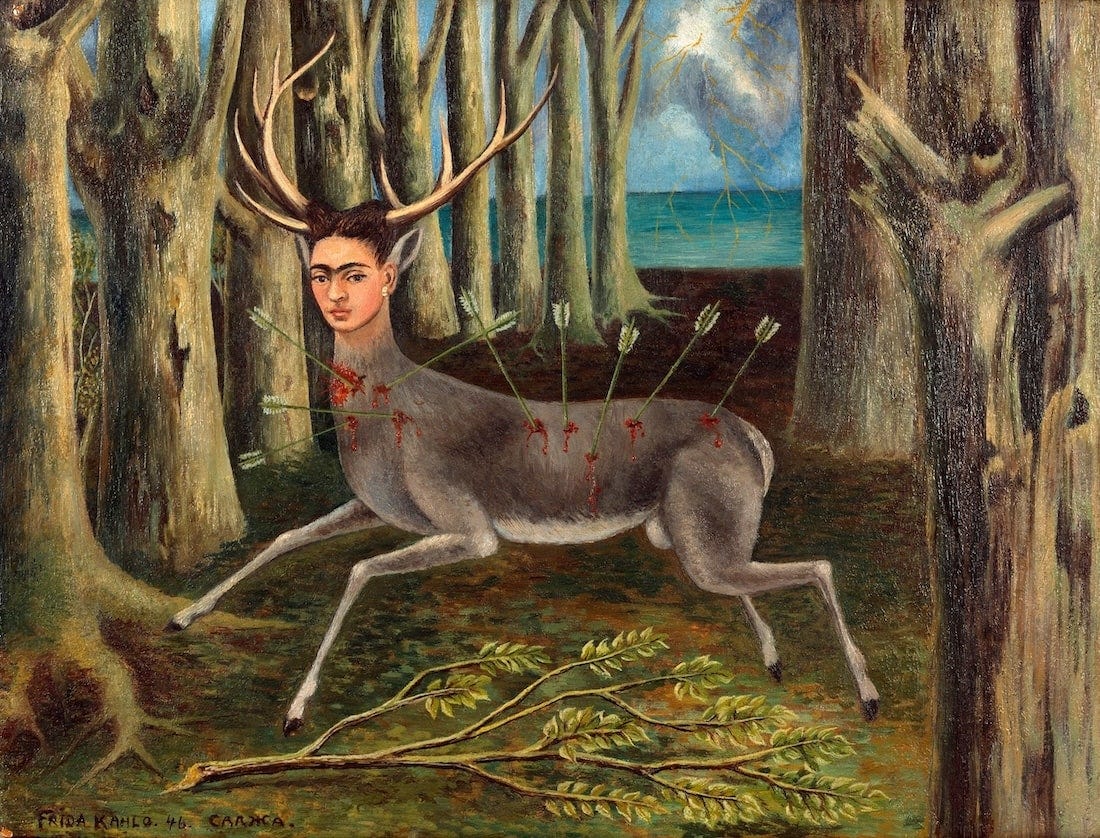
Words both said and unsaid fly through the ether; arrows puncturing the developing flesh of our being. You’re not wanted here.
And so a great cycle of rejection begins. We reject ourselves because we believe we are rejected already. We scorn ourselves and our imperfections; we self-flagellate with every mistake and misinterpretation. We deem every unholy longing, shameful curiosity, and uncertain idea as sin. In our pursuit of some form of social and cultural and familial and religious righteousness, we do everything we can to reject our humanity; to ignore what is dark within us.
Eventually, we learn how to reject others. They who tenderly, unknowingly, touch the pain that stings with every movement. I don’t want you, because you remind me of what I am afraid of. You remind me of what I never had and who I may never be. You are a reflection of all that suffocates and crushes me.
We are the crucified, the mourner, and a sword that pierces the skin.
What shall we do with all of this pain?
The beautiful paradox is that the wound that formed from your pain is often the source of healing for others. And you’ll be relieved to know that we do not need to forgo our pursuit of belonging, or to ignore the desire to find signs of sameness. The healing of our xenophobia is to realize that we cannot lose what ultimately defines us. When we connect to that, we see the greater threads of connection weaving us together into a body of belonging.
In Greek mythology, Cronus, king of the Titans, takes on the form of the horse, and subsequently impregnates an ocean nymph. A ungodly child is born: a centaur called Chiron. His mother looks upon him with shame and disgust, and casts him out. He is later found and raised by Apollo, where he grows to become a wise, sensitive, and compassionate helper.
Later, he is struck by a poisoned arrow and the wound never heals. Although he is a healer to others, he cannot heal this wound. Now double-wounded, first by being unwanted by his mother and then by the violence of life, Chiron is used as a symbol of the wounded healer. Like others in the canon of myth and metaphor, wounded healers use their pain to connect to, and alleviate the suffering of others, and even, give the gift of life through their death. (If you want to learn more, here is an interesting episode on the topic from a Jungian perspective.)
The wound is an important aspect of being alive. Without it, how would we understand pain? Rumi famously said “the wound is where the light enters you,” and Omid Safi carried the thought further in his poem, Where the Light Enters You:
The scars tell me
I lived through it all
and grew.
I survived.
Even thrived.

The wound
the injury
and the healing
are now all a part of me.
Through the shared pain of existence, it is a sliver in our sides where both water and wine flow, where joy mingles with sorrow to become a potion of healing.
Most people would agree that there is language and wisdom waiting to be found in the shadows of our pain. A tongue that is spoken by all people, a story that is told in every human heart. When we begin to articulate the message of the wound, we hear a voice that exposes the secrets we all share. A hidden hope to be wanted and embraced for all we all, not only the acceptable parts. I am dark, but lovely. I am broken, but whole. I am grieved, but alive.
These dark spots on our soul can be portals of peace, and the source of our greatest wisdom. Wound to wound we could be connected; a common language is what we speak. Oh, you suffer, too? You are crushed by the fury of unloving words? You have felt the neglect of silence? You are filled with generations of unmet yearning? Yes, as am I, as am I.
Throughout human history, spiritual awakening is often born by suffering. Breakdown, surrender and ego-death, the holy trinity of a spiritual life, strip us of our illusions of what makes us worthy. This dark landscape is not where we remain; it’s a passageway. We are crushed, and in the crushing, we find a more meaningful, powerful, compassionate life. Here is where the wound works in us.
Though there are many forms and ways to experience this kind of death, they all lead to a kind of soulful liberation.
Because, like John Steinbeck’s character Lee says in the last chapter of East of Eden: Now that you don’t have to be perfect, you can be good.
Now you see yourself. You don’t have to pretend. You can attend to everything; every part of you. You are free from being held up by those fragile pillars. You can be devoted to your life and to what makes you, you. What a relief. This is where the practice of self-love takes on a living potency. It’s not self-indulgent, selfish, self-centred love. It’s complete, unyielding acceptance; an embrace of a higher identity.
After the death, do you become a person without a history? No, certainly not. Do all of your fears and insecurities suddenly vanish? Sadly, no. But now you have the strength to love yourself and to see that all within you deserves love: What is heavy and cumbersome, uncertain and troubling, surprising and embarrassing. You don’t devote yourself only to what is perfected or what is healed, because you know now that all is worthy. Then, after practicing this love and acceptance, it becomes a methodology in our lives, filtering through our thoughts towards others.
And so the wounded healer is born from the canal of pain. No longer rejecting ourselves, what is left to reject in another? Seeing everyone as brothers and sisters of suffering, we are able at last to unite with the heart of humanity.
I have found that devoting myself to what is difficult and dark within me has given me a greater ability to understand, and therefore love, what is difficult and dark around me. I am loving the wounds within.
This sameness unites me to a world that is also wounded. I have bathed in the black pool of shame; I know the hands of guilt and I have felt them wringing is to communicate something beautiful, powerful, and simple. We feel the same things, share the same fears. We are the same, in different languages and forms. Yes, I know you are afraid; I am, too! I know you are broken; so am I!
We tune into the pain we feel, we give it a voice, we allow it to breathe. In every word there is a return to ourselves, to that original self, to a person being formed by acceptance. I am lost, I am unwanted, I am unworthy, I am afraid. If you listen lovingly, your ears may burn when you’re in dialogue with others. You will hear a familiar whispering beneath their words. I am lost, I am unwanted, I am unworthy, I am afraid.
The wounded healer is a listener. Devoted to loving all of the brokenness within and without, this is a soul transformed by the knowledge that no one is better or worse. This soul knows we are the same in all the most important ways.
Living in devotion to the poignant and the frail, to the light and the shadow, to insecurities and the ego, we increase our capacity to pay attention to the complex juxtaposition of an existence that is far more than black and white.
So, do not deny the pain you feel; do not neglect the place of darkness within you. Embrace yourself; love yourself entirely. Love is the great work that begins in you.
And oh, what joy to experience the power of grace that meets our humanity in our place of frailty. The wisdom of grace teaches us that we are not strong, good, or heroic on our own. Grace grinds down the ego and wrestles us until we can stand up, dust off our knees, and say that we are now enough. Now that we are honest. Now that we can see how beautifully, wonderfully, broken we are. No longer better, superior, or Other, we are the same, and can give grace to that which is fractured in all beings.
Yes, yes, yes, the wound can be a womb that births us into beings of compassion. How I pray that the pain will soften and subsequently awaken us to realize: we are all wanted and worthy of love.
I allowed the darkness in me to be expressed,
and then I loved it.
What was hiding in my dark,
my eyes see an unifiable gap
of shame and fear and hatred;
a lake of black joined to streams
living breathing streams of life.
I allowed the darkness in me
for all rivers to flow
and bathed in each of the waters.
Leaning down to kiss
the reflection, I saw it:
myself, whole.